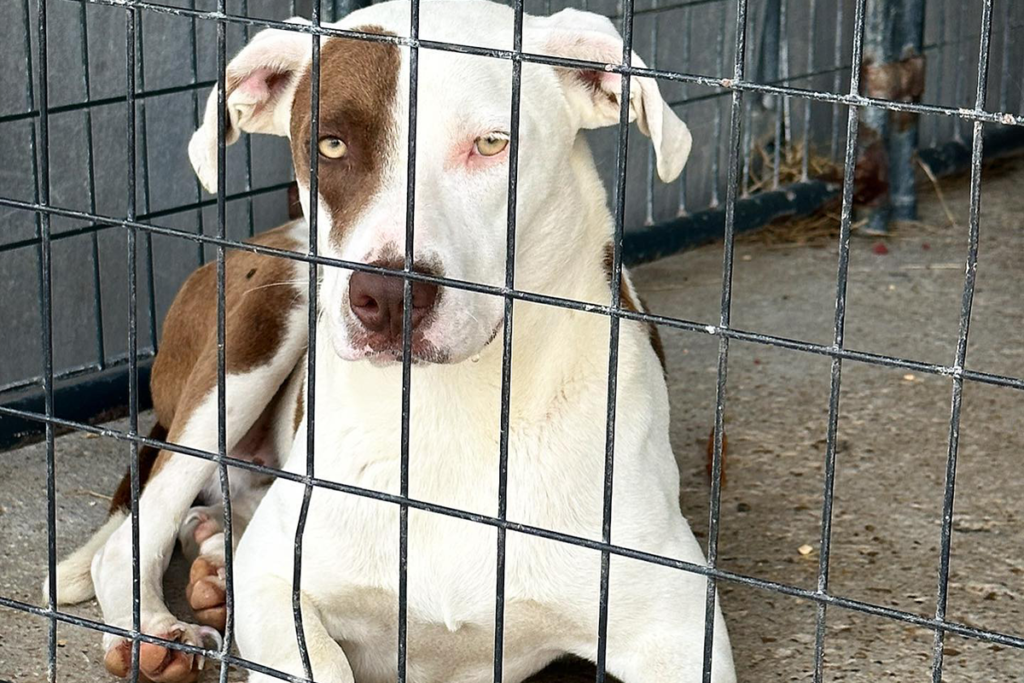
Affectionately referred to as House Hippos and Land Seals, due to the American Pit Bull’s stocky, “velvety” build and boxy snout, they are known for being as playful and humorous as these nicknames suggest, but these same characteristics are also what has vilified them for decades.
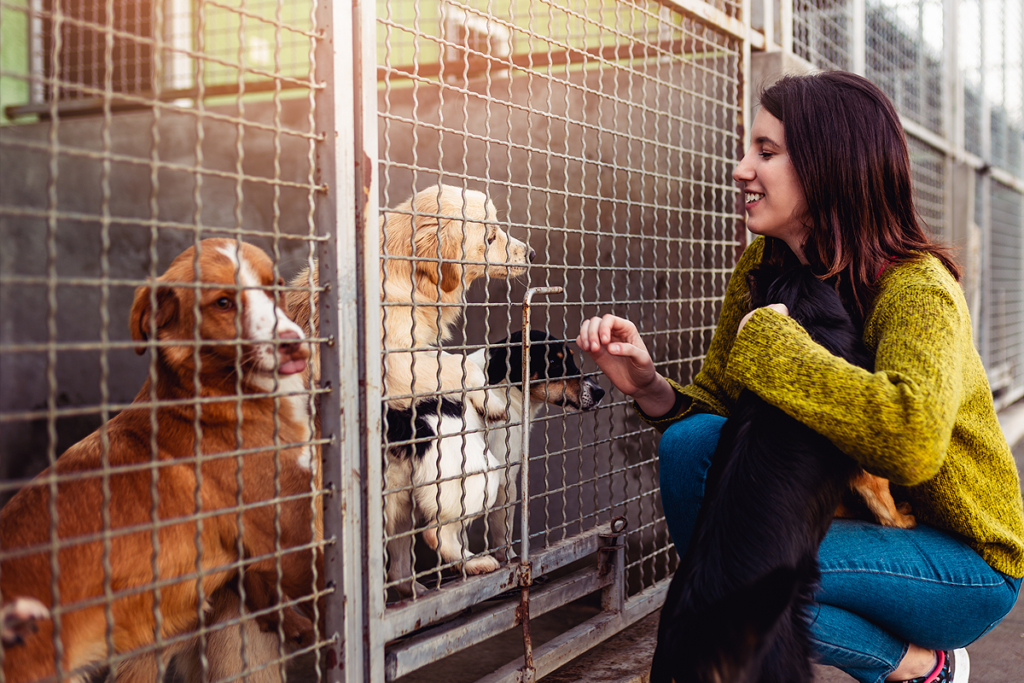
October is National Pitbull Awareness Month, dedicated to educating the public, dispelling myths, and challenging the negative stereotypes associated with “pit bulls”. The goal is to promote the adoption of these often-misunderstood “bully breeds” by highlighting their affectionate, loyal, and playful nature and to encourage support for shelters and rescue organizations.
Contrary to popular belief Pit Bulls are not one specific breed but rather many breeds all placed into one category. These breeds are American Pit Bull Terrier, American Staffordshire Terrier, American Bully, Staffordshire Bull Terrier and occasionally the American Bulldog. Throughout the years the media and irresponsible humans have created an unjust and biased stereotype of bully breeds in general. But it’s very important to keep this in mind – “No dog is born inherently aggressive and dangerous simply because of their breed. Just like humans, if given love, boundaries, attention and socialization a dog is a happy and faithful companion. If ignored, abused and mistreated any breed of dog will reflect the treatment that they have received.”
At the turn of the 20th Century, Pit Bulls were known as America’s Dog. So, when did things change – and why?
The short answer is…people. People began using the loyalty, strength, and determination of these dogs to their advantage by using neglect and abuse to manipulate their behavior for profit.
THE BIRTH OF THE BULL
In the 1800’s, a sport known as “bull baiting” became a popular pastime in the British Isles. Old English Bull dogs were bred to bait bulls into immobility for sport. When this sport was outlawed, dogfighting continued to be all the rage. Bull dogs were crossed with Terriers and released into a “pit” to fight and kill one another, hence “Pit Bull.”
During the surge of immigration to America, many families kept their Pit Bulls, for they were highly intelligent and friendly family pets. These frontier dogs took on an all-purpose role. They were responsible for herding cattle, herding sheep, guarding livestock and families against thieves and wild animals, helping on the hunts and as hog catchers. Their loyal and loving demeanor with humans, especially children (this is where the “Nanny Dog” myth originated from), earned them a prominent place not only as a working dog but as a companion.
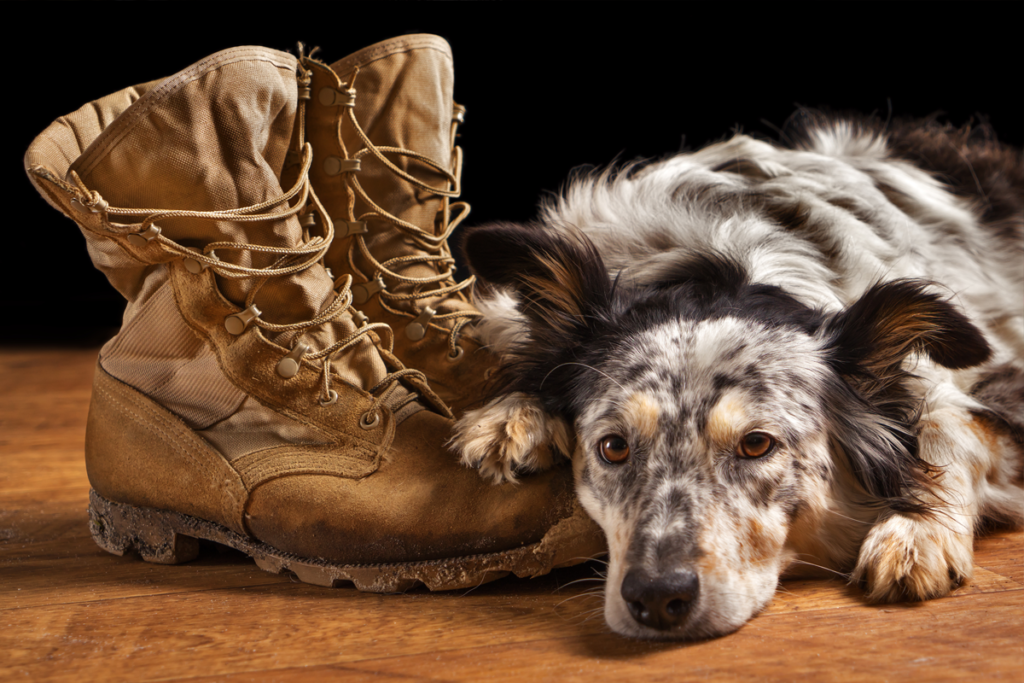
During WWI and WWII, Pit Bulls were even featured as a national mascot, representing protection and fearlessness. The more notable of the first war-dogs was Sergeant Stubby. Sergeant Stubby has been called the most decorated war dog of WWI and the only dog to be nominated for rank and then promoted to sergeant through combat. He served 18 months on the front lines in 17 battles and 4 different campaigns.
Perhaps the most famous Pit Bull was Petey, the adorable ring-eyed cutey featured on Little Rascals. The pit bull was also a favorite among politicians, scholars, and celebrities. Helen Keller, Theodore Roosevelt, Thomas Edison, Mark Twain, Fred Astaire and Humphrey Bogart, just to name a few, all had pit bulls as companions.
Pit Bulls began to be seen more as “regular dogs”. They were given attention neither more or less than any other breed.
THE PEBBLE AND ITS RIPPLE EFFECT
In 1976, Congress amended the Animal Welfare Act of 1966 to address dog fighting, among other issues. This groundbreaking amendment made dogfighting officially illegal in all 50 states. Today, dogfighting is a felony in all 50 states, the District of Columbia, Guam, Puerto Rico, and the U.S. Virgin Islands. In most states, the possession of dogs for the purpose of fighting is also a felony offense. As well as, being a spectator at a dogfight is illegal in all states except Montanan and Hawaii. Unfortunately, many times when an act is made criminal, it draws the attention of criminals.
As dogfighting began to re-emerge in the 1980s, animal advocates put an increased focus on the cruel, barbaric and illegal blood sport. The inadvertent and unfortunate side effect of this new movement was that some people began to seek out Pit Bulls for illicit purposes. The criminal set began trying to squeeze these dogs into a mold they were never designed to fit. The breed who was once bred to treat every stranger like a long-lost friend was now being used as guard and protection dogs and were being fought in underground fighting rings. The demand for pit bulls led to many owners breeding their own dogs without concern for temperament or socialization and for the purpose of making a profit, rather than providing a responsible home. Soon Pit Bulls were associated with poverty, “urban thugs” and crime. They were viewed as money-making commodities instead of family members and companions.
While there is no defining moment in which to point to and say “here is where it all went wrong”, many trace the turning point to 1987 in which a Time Magazine cover story was titled “The Pit Bull Friend and Killer”.
Thanks in large part to the media, the All American Dog began to be exploited at new lows and stereotypical images like what was seen on the infamous Sports Illustrated issue, “Beware this Dog”, seemed only to confirm for the public that these dogs were to be feared and should not live in homes. The Pit Bull, seen by criminals as items to be discarded and now being seen by the public as a danger, began to fill shelters at an alarming rate. The media portrayal and demonization of the Pit Bull paved a perfect path for the onset of Breed-Specific Legislation (BSL). (The first recorded city to pass BSL was Hollywood, FL in 1980). BSL began to crop up in select places as the dogs began to be used as a political platform by opportunistic politicians.
Though media outlets successfully created an air of terror around Pit Bulls, there was a spectacular turn of events, though brought about by one of the most horrible atrocities. In 2007, Michael Vick’s Bad Newz Kennels were raided and for the very first time, Pit Bulls had the opportunity to be seen as individuals.
Previously deemed as unable to be rehabilitated, pit bulls that were seized were typically euthanized. However, several groups like Best Friends Animal Society and Bad Rap took a chance on these dogs and found that almost all of them (48 out of 51) were able to be placed in foster care or re-homed.
The media couldn’t help but take a new look at Pit Bull type dogs when the Vicktory Dogs emerged as successful loving members of society, and the public happily embraced their stories of recovery.
And if these fighting dogs could be rehabilitated, what about all the other ones who just got dealt a bad hand or ended up in shelters.
The television series Pit Bulls and Parolees, which launched in 2009, has showcased the breed’s resilience, as well as their gift for rehabilitating the human spirit. The show follows renowned trainer Tia Torres, founder of the Villalobos Rescue Center, who gives paroled felons a chance at redemption by giving them the tools to train abandoned and abused Pit Bulls so they are ready to enter new homes as the family pet. Not only do the Pit Bulls get a second chance at life, but they give the parolees a renewed purpose.
Today, Pit Bull type dogs continue to receive more and more positive media attention, due in large part to education and advocacy organization devoted to promoting an accurate image of these dogs. They are loved and owned by several prominent figures such as Jessica Biel, Jon Stewart, Kale Cuoco, Rachel Ray, Jennifer Aniston and many more!
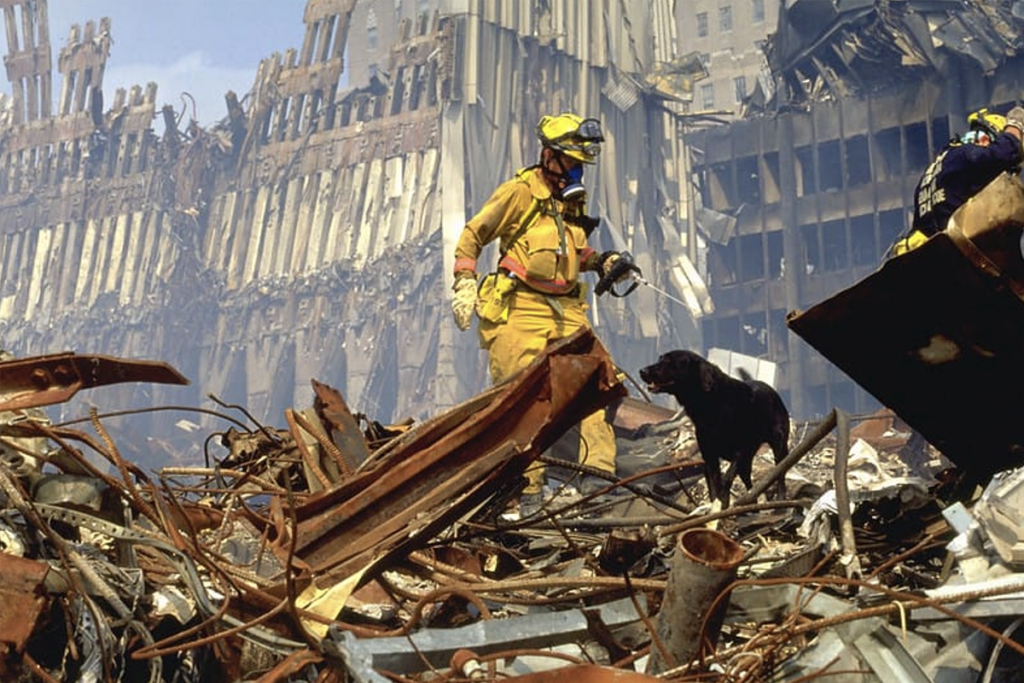
They can be seen in the show ring, in various dog sports including agility and weight pulling, in law enforcement work including narcotics detection, in search and rescue, in the armed forces, as service dogs, in our homes and as therapy dogs, like LOVE-A-BULL’s Pit Crew, reaching out and offering comfort to people in hospices, children’s hospitals, veterans programs, women’s shelters, etc.
Pit Bulls are once again becoming the All American Dog.